
by Dan Z
Cover photo via pexels
On Monday, January 20th, the world watched as Trump was sworn into office. He assumed the presidency with a large day-one agenda and signed 26 executive orders covering everything from immigration policy to the federal hiring process. The signals are clear that major changes are coming down the pipeline during his second term. But will he ban pornography? Is such a radical cultural change possible? And if it were, would a ban effectively put an end to the porn epidemic?
Media outlets have widely publicized the possibility of a nationwide porn ban in 2025, with article titles like “Trump divides the porn industry. He might also ban it.” from Mashable, “Donald Trump’s Election Win Could Lead to Porn Being Banned” on Newsweek, and “Trump Aide Promises Ban on Pornography in 2nd Trump Term” on MTN. A pro-porn organization called Hands Off My Porn has spent hundreds of thousands of dollars on advertising to warn about the Trump administration’s nefarious scheme to outlaw porn.
Although Trump’s history with Playboy (appearing on the cover of the March 1990 edition) may call his personal convictions into question, not so with vice president JD Vance. Vance is broadly characterized as openly supportive of a porn ban; article after article, from the Huffington Post to the Guardian, warns that Vance would likely support such legislation.
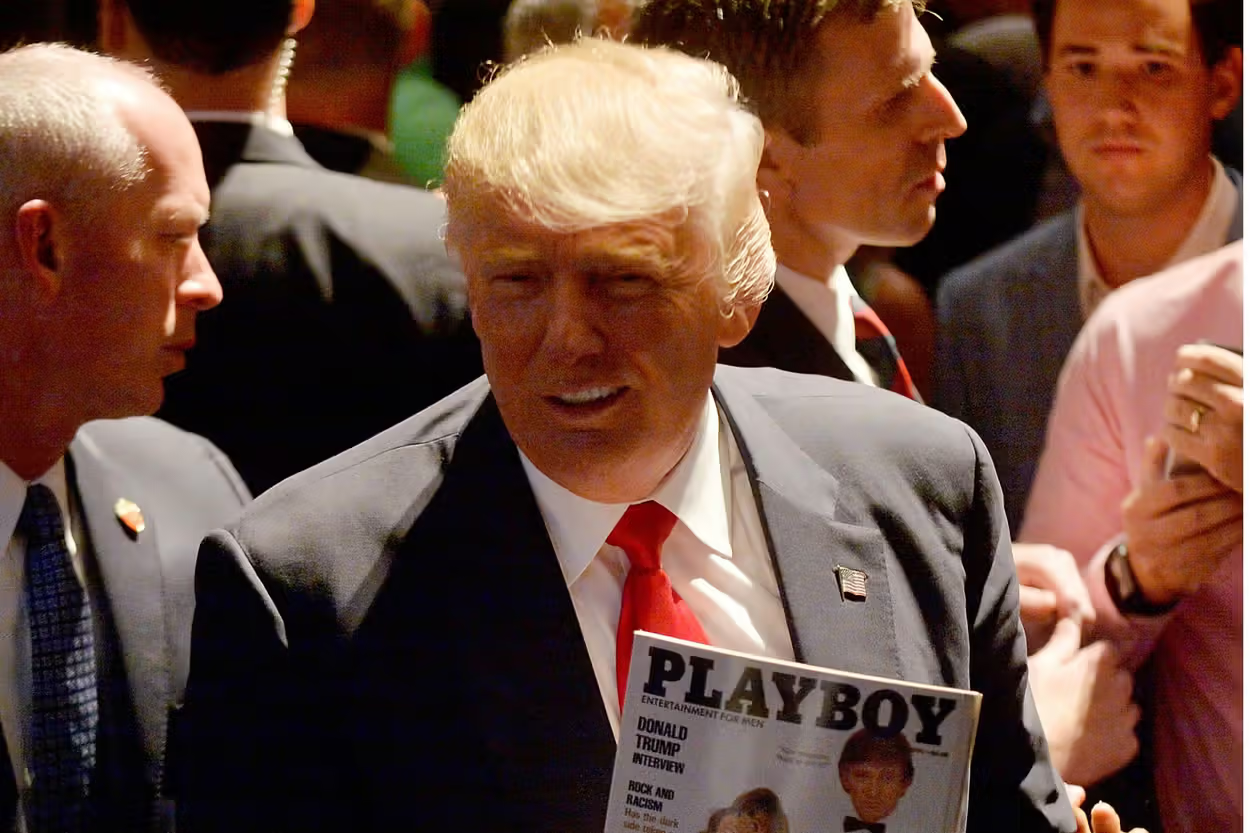
2016 photo of Donald Trump holding the edition of Playboy in which he was featured.
Image credit: Sara D. Davis / Getty Images
The Heritage Foundation, a conservative think tank, unveiled the highly controversial Project 2025 (P25) last year. P25’s “Mandate for Leadership” document is a massive playbook for a top-down conservative overhaul of the federal government, and it supposedly advocates for a porn ban, the takedown of porn websites, and the legal prosecution of those who produce, distribute, and promote access to adult content. While Trump has repeatedly distanced himself from the project, he has indeed nominated many of its authors to his cabinet, and some argue that Trump’s executive orders mirror its policy recommendations.
However, despite the noise, a porn ban may not be so inevitable. All of the speculation about Trump’s intentions is based on two assumptions: that P25’s Mandate for Leadership promotes this agenda, and that Trump will follow its recommendations.
It is doubtful that Trump will pursue every legislative recommendation in the nearly one thousand page document. Some align closely with his stated intentions, others do not. And even if he did implement every single policy change contained in P25, porn would still not be banned. Why? A deep dive into the publication reveals that the only mention of a porn ban is in the forward, written by the Heritage Foundation’s President Dr. Kevin Roberts:
"Pornography should be outlawed. The people who produce and distribute it should be imprisoned. Educators and public librarians who purvey it should be classed as registered sex offenders. And telecommunications and technology firms that facilitate its spread should be shuttered."
The forward is only intended to be an introductory statement. The rest of the publication lays out specific, measurable legislative actions to overhaul nearly every federal program and office. This part of the document - the part that could feasibly be implemented - contains no actionable policies dealing with porn. Dr. Roberts’ bold language in the forward - at least with respect to explicit material - is all bark and no bite.
As for JD Vance, all of the articles that supposedly provide evidence of his intent to ban porn cite a single article from 2021 in the Catholic magazine Crisis. Author Jessica Kramer states that Vance told her he supported a porn ban. Next, she provides a direct quote about how Vance thinks porn affects younger generations, but notice that she does not provide a direct quote for his statement about banning porn:
I spoke with Vance. When I asked his thoughts on porn and birth control and their effects on familial decline, Vance admitted he wants to outright ban pornography. He went on to say, “I think the combination of porn, abortion have basically created a really lonely, isolated generation that isn’t getting married, they’re not having families, and they’re actually not even totally sure how to interact with each other.”
Even if he did say something to this effect, it was as Ohio’s senator. This article is more aptly characterized as speculative rather than hard evidence of an approaching porn ban. Vance’s vice presidential intentions remain undisclosed.
We have insufficient evidence to conclude that the Trump administration intends to ban pornography. We may speculate with more or less accuracy about the personal convictions of the individuals within the administration, but that speculation does not guarantee the inevitability of a nationwide ban. Speculation aside, is such a ban even possible, legally? The answer to this question is complex, and we must turn to history to answer it.
In brief, the answer is yes. There was a period of US history in which porn was completely banned nationwide, known today as the Comstock Era. Anthony Comstock, a Union civil war veteran and devout Christian, joined the Young Men’s Christian Association (YMCA) as chief inspector of its campaign to rid New York of obscenity. In 1868, the YMCA had successfully lobbied the New York state legislature to pass a law that prohibited the sale or distribution of “obscene or indecent” materials, but enforcement was tenuous. Comstock joined the YMCA in its efforts to enforce this law. His ambition and success eventually led him to pursue federal legislation to the same effect. He spoke before congress, and in 1873, President Ulysses S. Grant signed the “Act for the Suppression of Trade in, and Circulation of obscene Literature and Articles of immoral Use.” For the first time in its history, the United States had made it illegal to produce, distribute, sell, or display any materials deemed “obscene, lewd, or lascivious.” In his article Sex and the First Amendment: The Long and Winding History of Obscenity Law, Geoffrey Stone notes that “During this era, even a single phrase, passage, or image involving sex was sufficient to warrant a criminal conviction.”
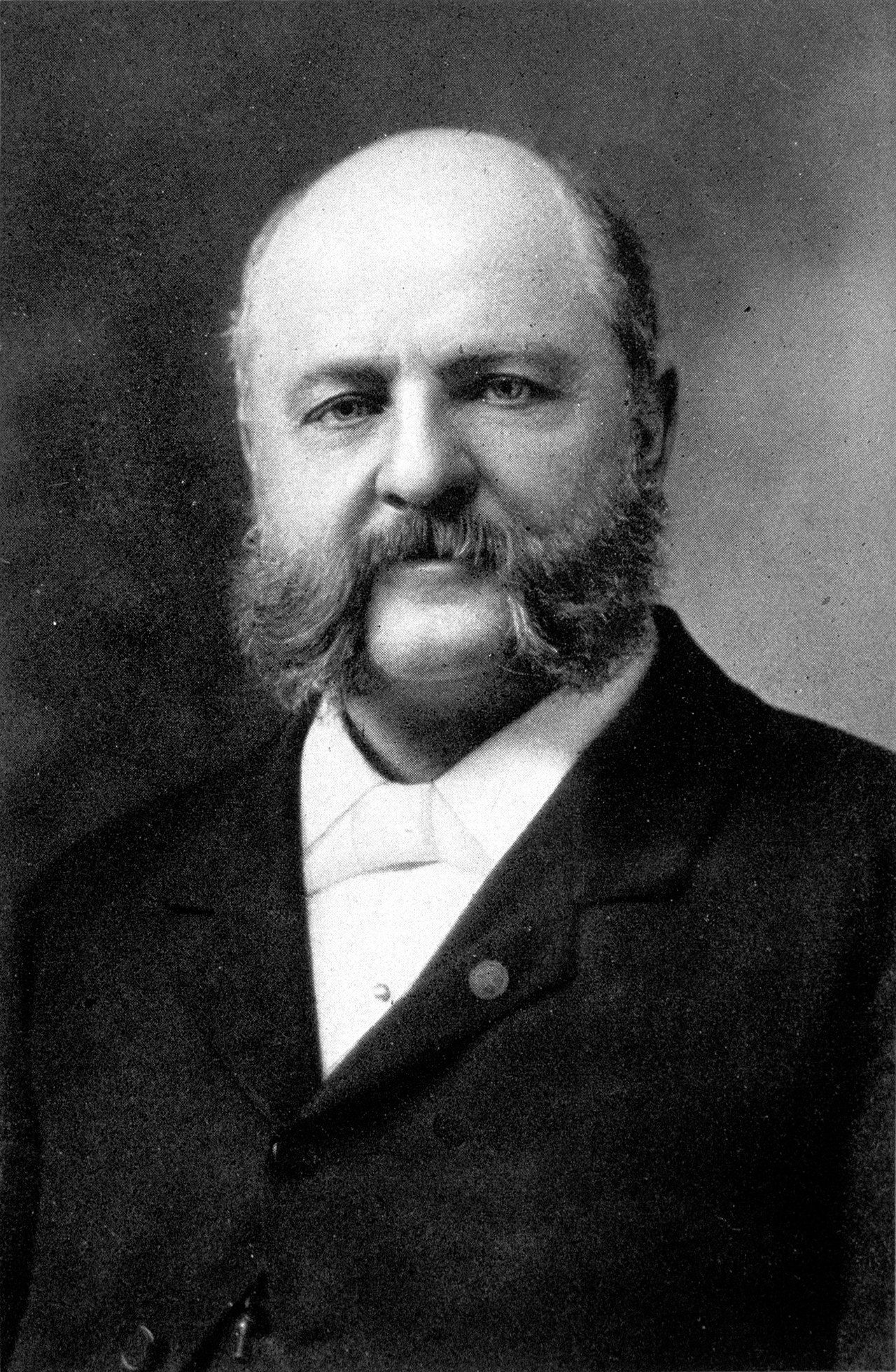
Anthony Comstock, circa 1913 (two years before his death).
The Comstock era was not to last. While this legislation successfully removed obscene material from public circulation, it came with unfortunate and unintended consequences: it eliminated any possibility of even innocent, healthy public discourse and education about sex. Because of this, the definition of “obscenity” and its relation to the First Amendment came increasingly under scrutiny in the 20th century.
The next major change to the definition occurred in the 1957 ruling from Roth v. United States. Samuel Roth, a New York publisher, had been convicted for his distribution of a magazine that contained erotica and pornographic images. He appealed this conviction on the basis of First Amendment rights, and the case made it to the Supreme Court. Chief Justice William Joseph Brennan, Jr. ruled in the majority opinion that obscenity was not protected under the First Amendment, but he also introduced a vague metric for defining obscenity: it was material which offended the “common conscience of the community by present-day standards.” This looser definition reopened the doors to healthy public discourse about sex. Justice Brennan couldn’t have known it at the time, but he had also inadvertently opened the doors to the wild and tumultuous sexual revolution of the sixties, and ultimately the porn era.
Because of Justice Brennan’s ruling, courts across the US lacked the specific language that was required to prosecute obscenity. Decades of repression under Comstock and his ideological successors had dammed up the turbulent waters of sexual desire; as expected, they burst forth in the form of highly pornographic films, magazines, and literature. This liberalization of what used to be considered obscene alarmed lawmakers, but little could be done. The ruling on two 1973 supreme court cases, Miller v. California and Paris Adult Theatre I v. Slaton attempted to reintroduce specificity to the definition of obscenity and catalyze action against it, but in vain. As Stone writes later in his article:
The social changes unleashed in the 1960s and 1970s, shifting cultural values, and the advent of new technologies—including VHS, DVD, cable television, and the Internet—simply overwhelmed the capacity of the law to constrain sexual expression. As the flood of sexual material outpaced the capacity of prosecutors to respond, community standards soon became more tolerant of what would once have been regarded as “patently offensive” depictions of sex, and the real-world definition of obscenity shrank down to a small fraction of what had once been thought to be obscene.
The “porn era” ushered in during the sixties and seventies was exacerbated by the digital revolution. Prosecution of obscenity was difficult enough back when all pornagraphic material was found exclusively in print and film, but as it spread to the internet, all hopes of curtailing it seemed to evaporate. Today, extreme cases involving children, rape, trafficking, or violence are still possible to prosecute, but the majority of adult content is legally considered “acceptable.”
Our cultural appetite for pornography and the present legal definition of ‘obscenity’ have all but removed the possibility of an effective nationwide porn ban. Perhaps this is why the Trump administration is hesitant to take it on, and why Project 2025 doesn’t have a clear plan for its implementation. Technically, a legal redefinition of obscenity could be achieved. But even if it was, history has demonstrated that such efforts are often accompanied by harmful societal side effects.
If a porn ban is unlikely and furthermore undesirable, must we simply admit defeat and accept its place in our culture?
Most assuredly not. The top-down redefinition of obscenity created a problem that goes deeper than the law, down into the very soul of our nation. What has been done with the stroke of a pen can only be undone by countless hours of lobbying, education, journalism, conversation, and research. Perhaps by these efforts the prevailing cultural disposition towards pornography will change. A growing number of organizations, influencers, and even state legislatures have boldly made this goal their own.
Fight the New Drug, a non-profit founded in 2009, has been highly successful in its efforts to educate people about the harmful effects of pornography. They provide a well-organized overview of the current literature with respect to porn’s effects on individuals, relationships, and society. Activist organizations Exodus Cry and the Justice Defense Fund recently succeeded in exposing the abuses prevalent on Pornhub which resulted in a massive content takedown, the severance of relationships with advertisers and payment processors, government-sponsored investigations, content audits, and new standards for age verification on the platform. Apps like Covenant Eyes provide advanced AI-based content filtering tools, education, and accountability. Brainbuddy, another app, uses cognitive behavioral therapy and other science-based addiction recovery strategies to help people truly quit their porn addictions.
Porn stars are leaving their industry behind to speak out against its abuses, and some have even become anti-porn influencers. Greg, a 23-year veteran of the industry and former top male performer, quit porn in 2011 and began to advocate against it. Tik Tok has seen anti-porn content creators go viral, like Jourdan K (@thatsnotlove) whose videos about porn addiction, relationship therapy, and recovery have over 20 million likes.
Even some state legislatures have taken up the issue: Texas passed a bill in 2024 that required age verification on adult sites, and many other states have proposed similar legislation. In reaction to this, Pornhub and a few other adult sites denied access to their platforms in some of these states. Plaintiffs including the Free Speech Coalition, an adult industry rights advocacy group, brought a lawsuit against Texas which will be heard in the Supreme Court beginning this coming week.
Pornography may remain unopposed by the federal government in 2025. But the fight to liberate the soul of our country is far from over. It won’t change overnight. But each small step forward invites us to take the next, and the next; only by perseverance and hope will we see the end of the porn era.